Enerthia Energy works across energy consultancy, business development, product and service endorsement, and funding. All four keep arriving at the same question, and it is no longer whether a project gets built. It is which network it plugs into. A municipal grid connection in South Africa carries different tariffs, different timelines and different metering to an Eskom one, and the latest quarterly registration figures show exactly how the market is splitting.
- NERSA registered 124 new generation facilities in the first quarter of 2026/27: 804 MW and an estimated R20.18 billion of investment.
- 63 of those facilities connect through municipal distribution networks. The other 61 connect through Eskom.
- The municipal 63 carry 47 MW and R639 million — under six percent of the quarter’s capacity.
- Registration follows capacity and connection: 100 kW or less goes to the distributor, above 100 kW goes to NERSA.
What did NERSA register this quarter?
NERSA registered 124 generation facilities in the first quarter of the 2026/27 financial year, with a combined capacity of 804 MW and an estimated investment value of R20.18 billion. Of those, 122 were solar photovoltaic facilities totalling 236 MW and two were wind facilities totalling 568 MW, and they were registered across all of South Africa’s provinces. The regulator processed the applications in an average of ten working days, an improvement on the eleven working days it took for 111 applications in the same quarter a year earlier. Since the registration regime began in 2018 it has registered 2 619 facilities, 20 131 MW and roughly R409 billion of investment.
Why does a municipal grid connection in South Africa matter now?
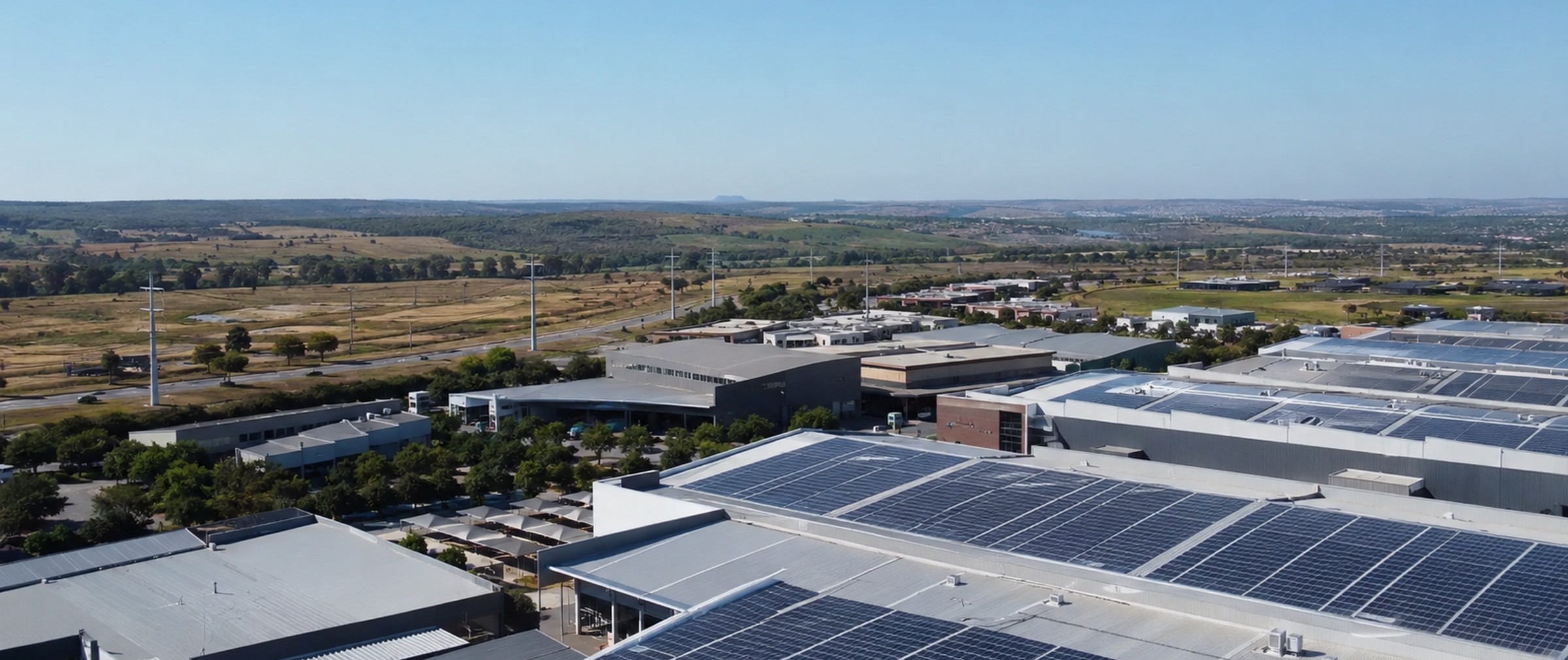
Because half the new projects chose that route. Of the 124 facilities, 63 connect to municipal distribution networks, carrying 47 MW and R639 million of investment. The remaining 61 connect to the Eskom network and account for 757 MW and approximately R19 541 million. Half the projects, under six percent of the capacity. That is the commercial and industrial market described in a single line. The average municipal-connected facility this quarter was about three-quarters of a megawatt; the average Eskom-connected facility was over twelve megawatts. Factories, retail centres, office parks, cold stores and farms connect locally. Utility-scale generation goes to Eskom.
Who do you register with, and when?
Registration is determined by installed capacity and by whether there is a point of connection to the grid, not by whether the electricity is exported or consumed on site. A facility of 100 kW or less with a grid connection registers with its distributor, meaning Eskom or the licensed municipality. Above 100 kW with a grid connection, registration goes directly to NERSA. A facility with no grid connection at all is exempt. A registration is also not the same thing as an electrical certificate of compliance: the two serve different purposes and both may be required. That distinction is where projects quietly lose weeks.
What should you check before committing to a connection route?
Five questions decide it. Does the network at the point of connection have capacity, confirmed in writing rather than assumed? What is the distributor’s tariff for embedded generation, and how is surplus treated — credited, wheeled, or not accepted at all? What is the realistic approval timeline, measured against the distributor’s own record rather than its brochure? What metering is required, who owns it, and what does it cost? And what happens to the tariff or the wheeling arrangement if consumption changes?
Municipalities differ enormously from one another. Some publish embedded generation and wheeling frameworks and move applications briskly; others have thin technical capacity and long queues, so the same project can be routine in one metro and stalled in another. Our energy consultancy work covers exactly this ground, and it sits alongside two related shifts: what electricity wheeling means for property portfolios, and why grid access has become the scarce resource.
The connection route is not a technical detail bolted on at the end. It sets the tariff, the timeline and the revenue model, and it is expensive to change once a site is committed. Half the projects registered this quarter chose the municipal door. Before you choose yours, know what is behind it.
Our offerings
Visit our Resources page for our offerings profiles:
https://enerthiaenergy.co.za/resources/