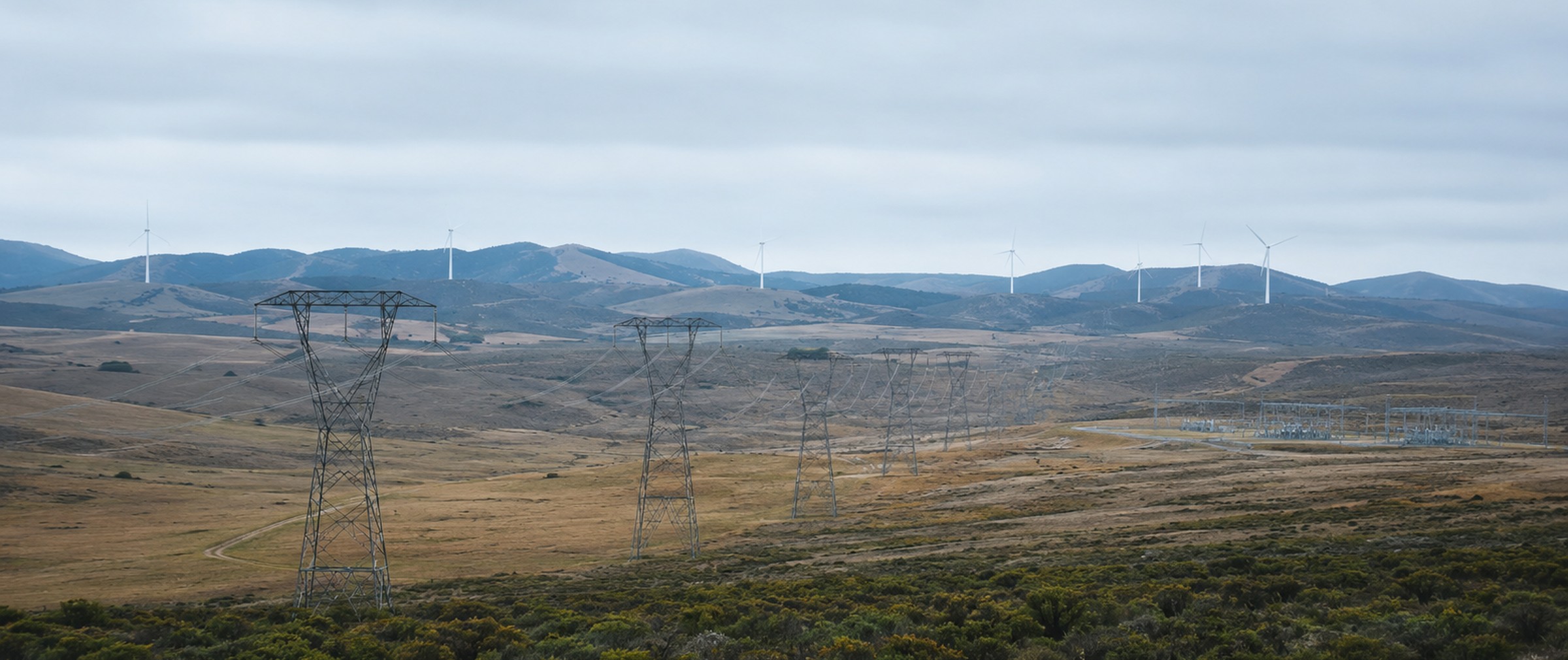
For a South African business planning an energy project, grid access is now the scarce resource. Scarcer than capital or equipment. Enerthia Energy works across four areas — Energy Consultancy, Business Development, Product & Service Endorsement and Funding Origination — and in all four the same question keeps surfacing. Not whether a project can be built, but whether it can be connected, and on what terms.
- The approved congestion curtailment allowance is 4 per cent, not the 10 per cent originally sought.
- It unlocks about 1 100 MW of hosting capacity in the Western Cape and 400 MW in the Eastern Cape, taking those provinces to 7 205 MW by 2028.
- Curtailment instructions rose from roughly 100 a month to more than 1 000 a month during 2026.
- Compensation claims under verification fell from about R2-billion in mid-June to R1.5-billion by late July, with the balance targeted for clearance by the end of August 2026.
What does congestion curtailment mean for grid access in South Africa?
Congestion curtailment is a trade: a project accepts that the system operator may instruct it to hold back a capped share of its output when the network is congested, and in exchange it receives a grid allocation years earlier than a new transmission line could deliver one. The regulator approved the mechanism as a constrained generation ancillary service on 29 April 2025, running to 31 March 2028, and generators instructed to curtail are compensated for the energy they were prevented from producing.
This is arithmetic, not policy. Along the Cape corridor the 2025 capacity assessment showed no conventional headroom at all. Curtailment is what turns a zero into a number.
How much grid capacity does the 4 per cent allowance actually unlock?
It unlocks roughly 1 100 MW of additional hosting capacity in the Western Cape and 400 MW in the Eastern Cape, taking total capacity in those two provinces to 7 205 MW by 2028. That figure comes from the revised addendum published on 31 October 2025, which settled the allowance at 4 per cent rather than the 10 per cent the original application sought.
The ceiling is lower than the industry hoped, but the route is open now. The mechanism applies to wind projects other than those already holding valid budget quotes, and two dates sit ahead of it: curtailment procedures were to be finalised by 31 March 2026, and the automatic curtailment system is due by 31 October 2026.
Why did curtailment volumes climb so sharply in 2026?
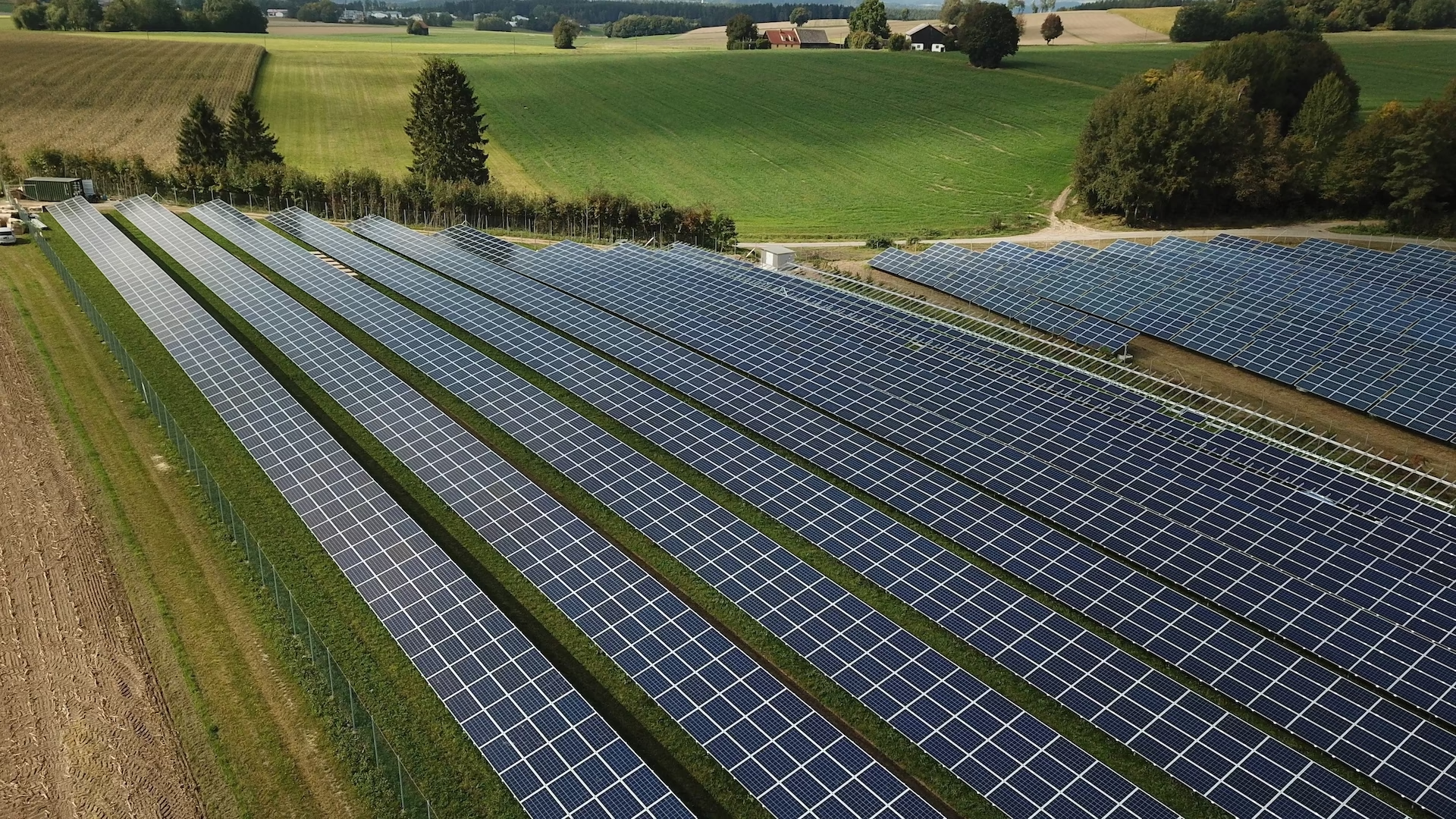
Because of the shape of the day, not a failure of the plants. Solar output peaks at midday while coal-fired units keep running to guarantee capacity for the morning and evening demand peaks. Flexible sources such as hydro and pumped storage are adjusted first; once those are exhausted, curtailing self-dispatching renewable plants is the last balancing tool available. Instructions to independent power producers rose from roughly 100 a month earlier in the year to more than 1 000 a month, against a backdrop of Eskom carrying a surplus of around 5 GW.
The volume surge tested the compensation machinery rather than the mechanism. Claims under verification came down from about R2-billion in mid-June to R1.5-billion by late July 2026, with the remainder targeted for clearance by the end of August. Some producers were reported to be carrying revenue shortfalls of around 9 per cent while they waited. The fix agreed in July pays the full estimated value of a claim upfront, with technical verification following afterwards.
What should a buyer ask before signing a grid allocation?
Three questions, and they are the ones our energy consultancy work returns to on every mandate. First, what curtailment exposure sits inside this allocation, how is it measured, and who carries it? A grid connection offer is no longer a yes or a no; it has terms. Second, has the energy at risk been modelled separately from the compensation lag? A capped allowance is quantifiable, and the two effects land on different lines. Third, where does the compensation lag sit in the cash-flow model, rather than in the assumptions annexure?
Those answers change the shape of a deal, and they interact with the route to market you choose. The structural answer is well known: storage at scale, market signals that reward daytime consumption, and grid planning built around the generation mix the country actually has.
Grid access has become a commercial negotiation rather than a queue. Businesses that treat it that way will secure better allocations than those still waiting for capacity to appear.
More briefings are available on our Resources page.