Enerthia Energy works across four connected offerings — energy consultancy, business development, product and service endorsement, and funding. This briefing sits where energy consultancy and funding meet: battery storage in South Africa has stopped being a pilot project and started being routine infrastructure.
Prefer to listen on YouTube? Play this episode there.
Battery storage: the signal is the repetition, not one deal
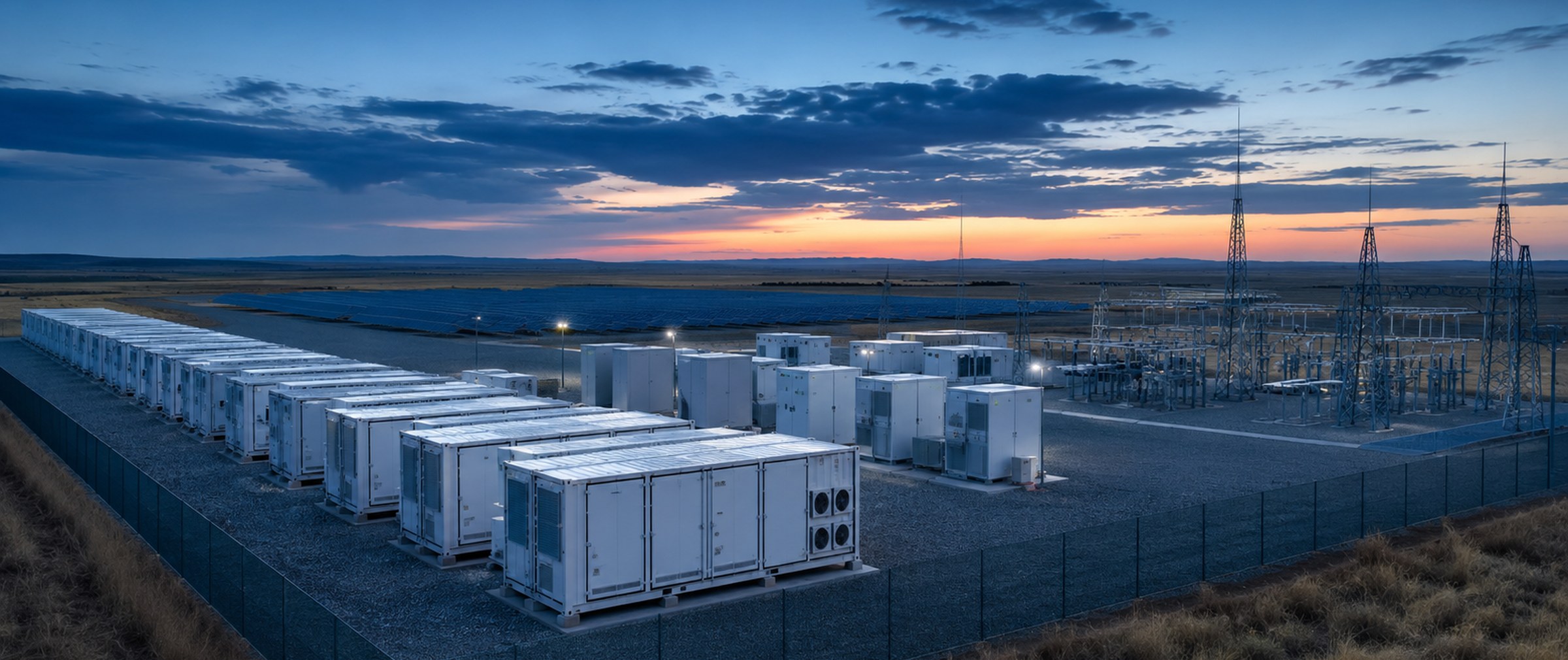
Mulilo reached financial close in June on the Hartebeesfontein battery — 77 MW / 308 MWh near Klerksdorp in North West. It was the company’s fifth financial close of 2026. The debt came from Absa, Standard Bank and Nedbank. The project sells ancillary services to the National Transmission Company under a 15-year agreement. Local banks, a long contract, a known buyer. That is not experimental. That is project finance behaving normally.
The public pipeline is large, with caveats
Government has secured close to 1.7 GW / 11 GWh of grid-scale storage across its programmes. The battery procurement programme alone has run three bid windows — the most recent closing in May — procuring roughly 1,744 MW / 6,976 MWh, contracted to be online by 2027/28. Commentators have raised fair questions about whether all of it lands on time, and that scepticism is worth holding.
The private side is where it gets interesting
SOLA’s Naos-1 reached financial close in February: 300 MW of solar paired with 660 MWh of battery near Viljoenskroon in the Free State, selling to Sasol and Air Liquide under long-term agreements. It is the first utility-scale solar-plus-storage project in the country purpose-built for wheeling to private end users, and the largest privately contracted hybrid project to reach financial close here. Commercial operation is targeted for 2028.
What it changes for a large user
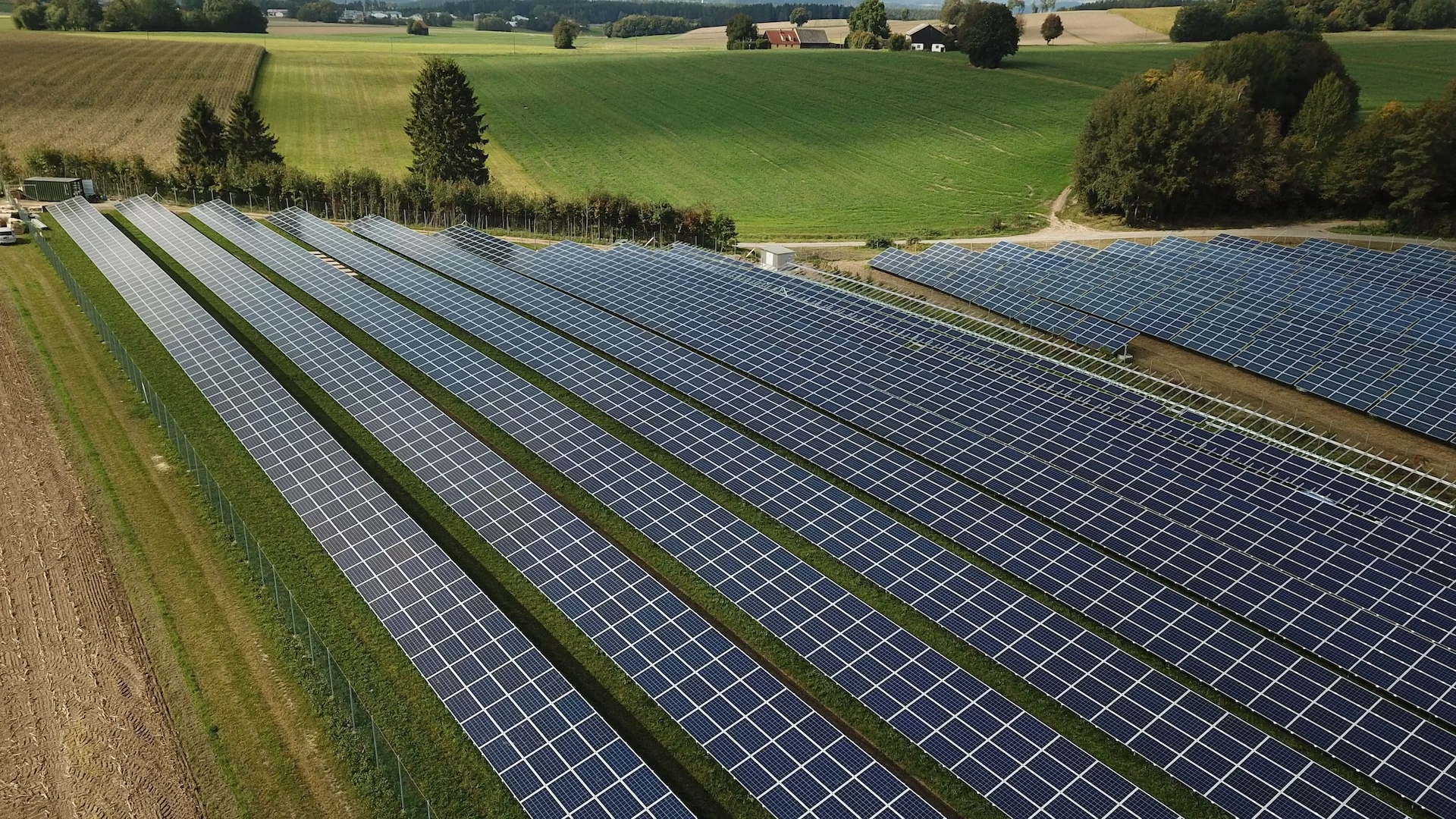
Solar on its own gives you cheap energy while the sun is up. Storage is what turns it into supply you can actually run a plant on, including through the evening peak. It moves the conversation from how many megawatt-hours you can buy to what shape they arrive in.
The structures have settled: local bank debt, long-tenor offtake, ancillary-services revenue, and hybrid wheeling to private buyers. The question for a large user is no longer whether storage is proven. It is what your load profile actually needs, and how you contract for it.
Enerthia funds and structures projects, and advises on where storage genuinely earns its place in a supply strategy. If you want to know what firming actually buys you, that conversation starts with your load shape.
Decks and further reading: https://enerthiaenergy.co.za/resources/