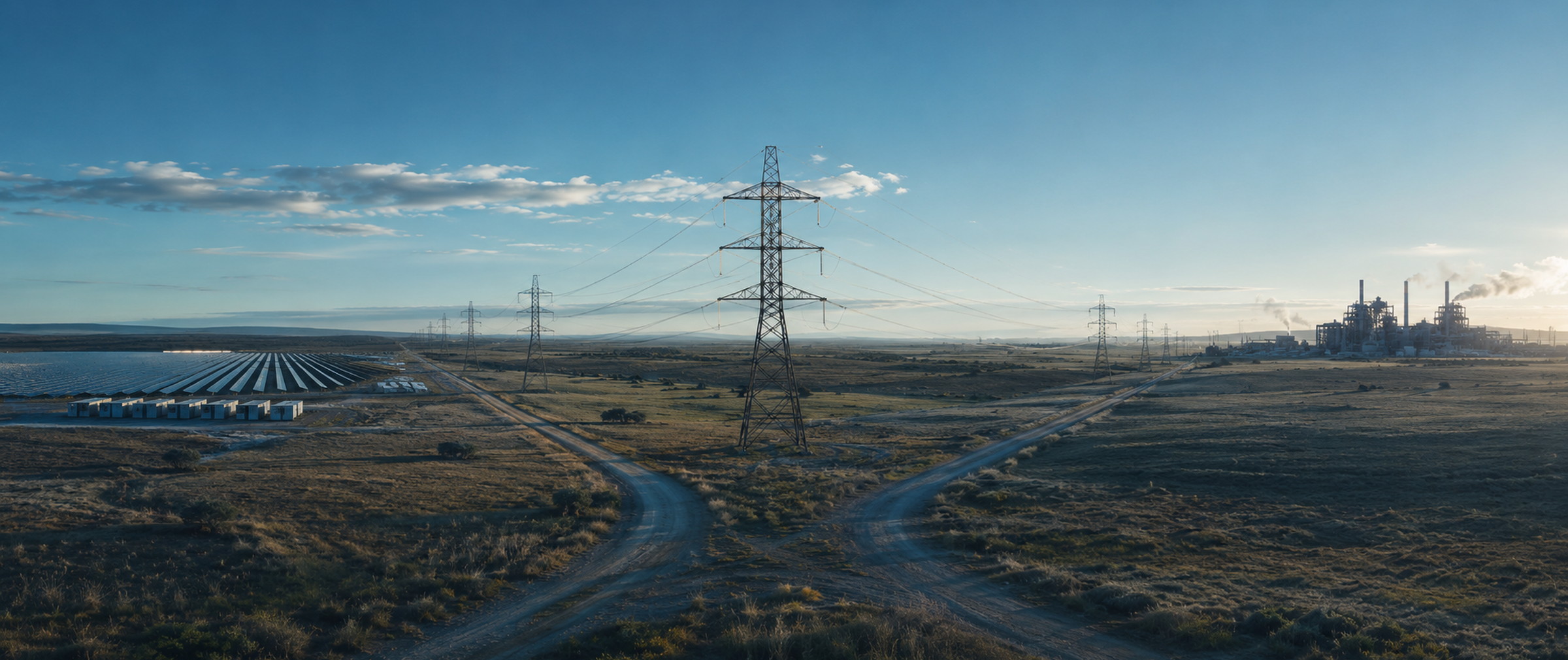
Enerthia Energy works across four connected offerings — energy consultancy, business development, product and service endorsement, and funding. This briefing sits where the first two meet: South Africa’s electricity market has reached a fork, and large industrial users are being asked to choose a side.
Door one: trader-led wheeling
Participation rules have been clarified and processes standardised across utilities. Portfolio-based aggregation is replacing the traditional one-to-one bilateral power purchase agreement, and trader-led aggregation is set to become the dominant commercial model in the South African private power market in 2026.
Aggregation is the part that matters commercially. It lets renewable supply be bundled, balanced and shaped around your own demand profile. It simplifies contracting, it reduces counterparty risk, and it spreads intermittency and balancing risk across a diversified portfolio instead of leaving that risk sitting on a single asset.
The regulatory groundwork is in place. The updated rules on network charges for third-party transportation of energy now permit cross-jurisdictional wheeling between Eskom and municipalities in both directions — a change the Minister of Electricity and Energy called the most consequential intervention in the electricity sector. The regulator counts more than a hundred wheeling agreements over the past fifteen years and around ten licensed traders already operating. Municipal wheeling tariffs are designed to be surplus neutral, so a municipality’s cost to serve stays the same whether the energy is wheeled or bought from Eskom.
It already works at industrial scale
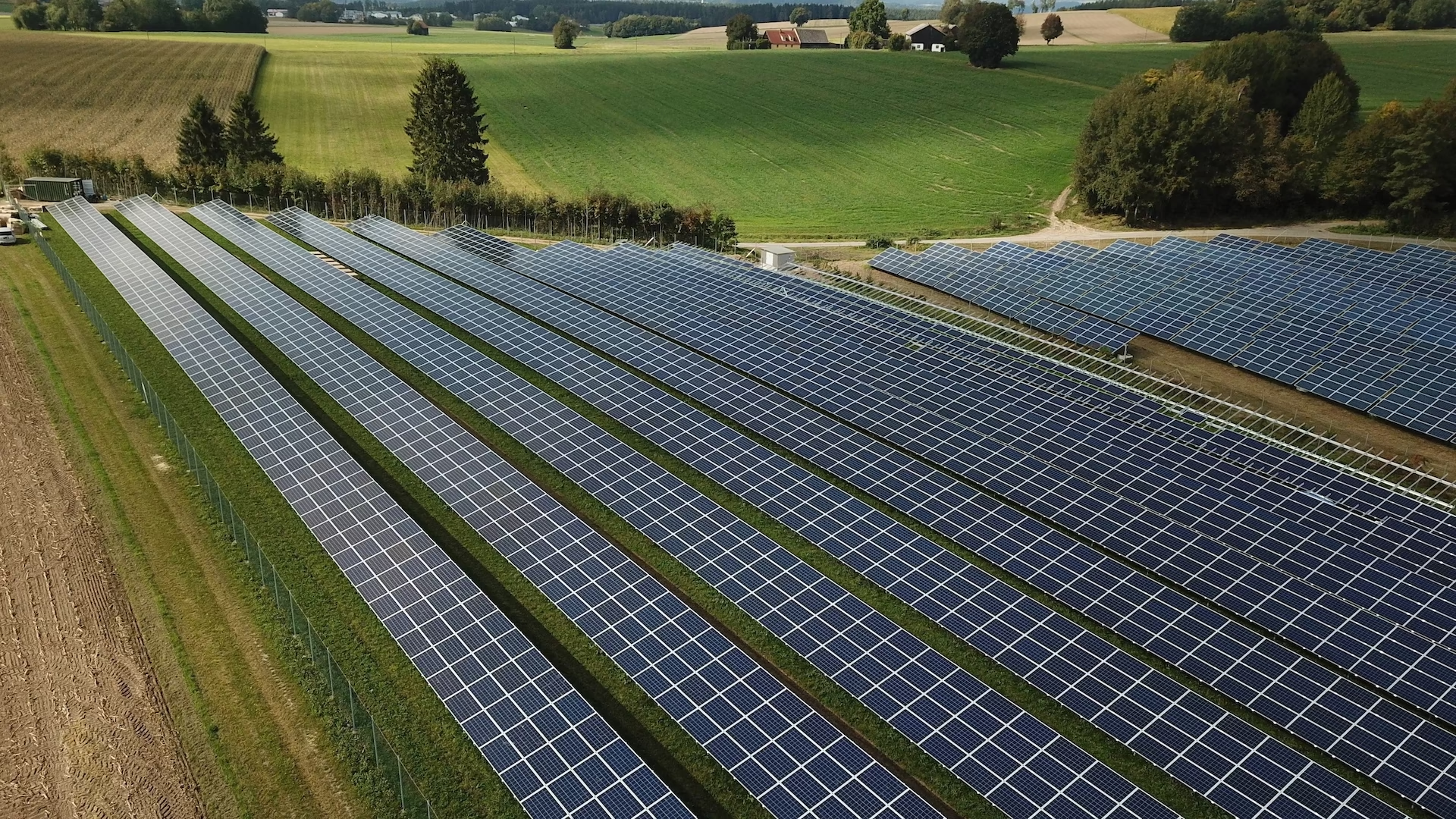
Naos 1, near Viljoenskroon in the Free State, pairs 300 MW of solar — 435 MWp installed — with 660 MWh of battery storage. It has reached financial close, construction has started, and it sells to Sasol and Air Liquide under long-term agreements. It is the first utility-scale solar-and-battery project purpose-built to wheel power across the national grid to private end users, storing daytime output and dispatching it into the evening peak. Commercial operation is targeted for 2028.
Door two: the negotiated pricing agreement
The regulator approved a temporary 35.6% tariff reduction for ferrochrome producers, taking them to 87 c/kWh for twelve months against an average standard tariff of about 220.92 c/kWh. The producers argue that sustainable operation needs a number closer to 62 c/kWh. The 2021 agreement covering the Hillside aluminium smelter — 10.3 TWh a year, roughly 5.6% of Eskom’s total sales — carries an effective discount near 50%.
The case for that route is jobs and export earnings. The case against it is that Meridian Economics puts the same grid flexibility at under R3bn a year using 1.2 GW of two-hour battery storage.
Which door are you standing in front of?
The useful test is not which route looks cheaper on a spreadsheet. It is which one you can actually contract for. A negotiated tariff depends on a decision you do not control and a relief window that closes. Wheeling depends on your load shape, your grid connection, and finding a counterparty willing to carry the balancing risk.
Enerthia advises on which route fits an operation, builds the business development around it, and funds the project where it needs it. That conversation starts with your load profile, not with a tariff table.
Decks and further reading: https://enerthiaenergy.co.za/resources/