Enerthia Energy works across four offerings — energy consultancy, business development, product and service endorsement, and funding — and this week’s battery storage financial close sits exactly where the last two meet. Hartebeesfontein, 77 MW and 308 MWh near Klerksdorp in the City of Matlosana, reached close on a contract that pays for stability rather than for energy sold. The capacity is not the story. The revenue model is.
- Hartebeesfontein is 77 MW and 308 MWh, awarded under Bid Window 2 of the Battery Energy Storage Independent Power Producer Procurement Programme.
- The offtake is a 15-year ancillary-services agreement with the National Transmission Company of South Africa — availability and response, not kilowatt-hours.
- Mulilo secured five of the eight projects awarded in that window; Absa, Standard Bank and Nedbank provided the debt.
- Storage is now closing standalone, because a system-services contract underwrites differently from an energy offtake.
That difference is worth reading closely, whether you are a sponsor taking a project to funders or an industrial buyer being shown a hybrid solar-and-storage proposal.
Prefer to listen on YouTube?
What reached battery storage financial close?
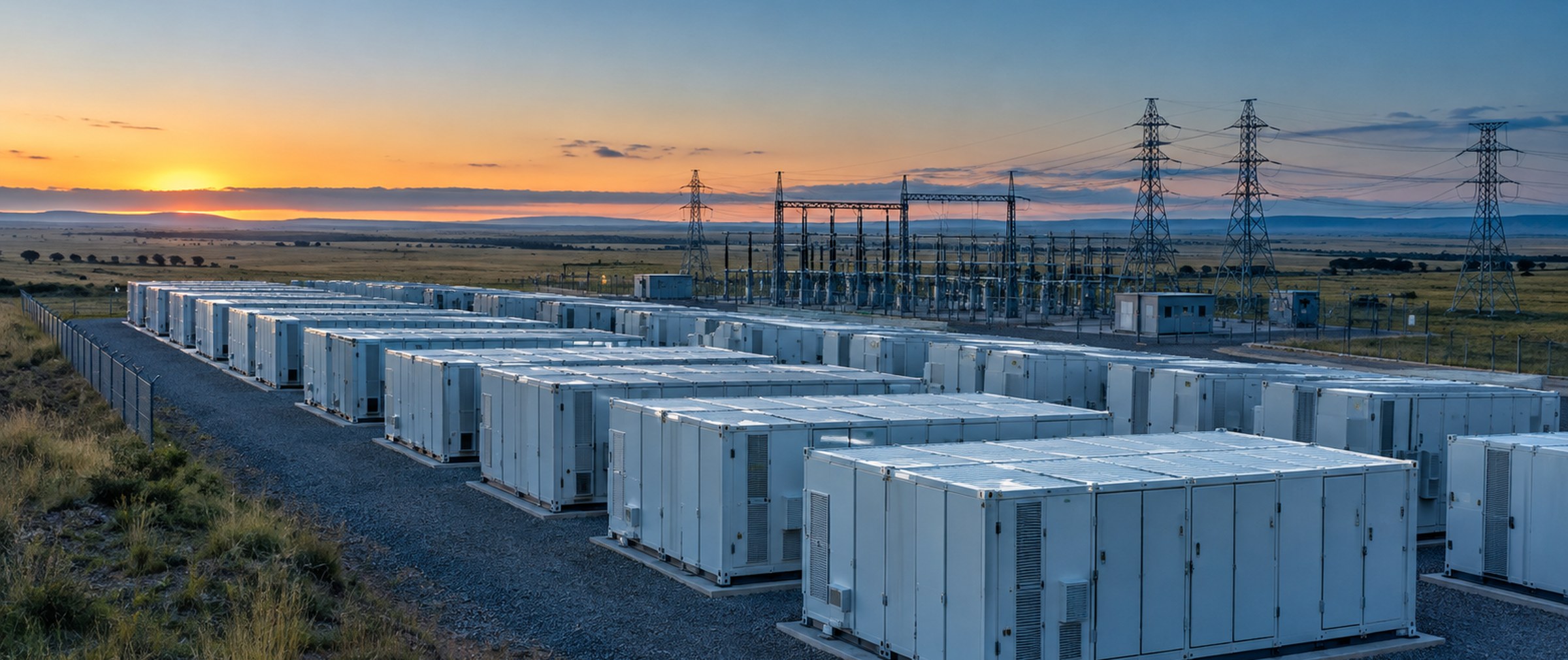
Mulilo reached financial close on the Hartebeesfontein battery energy storage project, 77 MW and 308 MWh, near Klerksdorp in the City of Matlosana Local Municipality in North West, sited close to Eskom’s Hermes main transmission substation. It is the developer’s fifth project to reach close in 2026. The project was awarded under Bid Window 2 of the Battery Energy Storage Independent Power Producer Procurement Programme, in which Mulilo secured five of the eight projects awarded. Absa, Standard Bank and Nedbank provided the debt.
Why does an ancillary-services contract underwrite differently?
Because it pays for a capability held ready rather than for volume sold. Hartebeesfontein carries a 15-year agreement with the National Transmission Company of South Africa for ancillary services. A solar power purchase agreement earns against a resource and a load; a system-services contract earns against availability and response, measured, with a single creditworthy counterparty on the other side. Volume risk largely falls away and is replaced by availability and performance risk, which is an engineering and operations question rather than a market one. That is a shorter conversation with a lender, and it is part of why the capital stack has been shifting toward contracted, service-based revenue.
What is the private market doing in parallel?
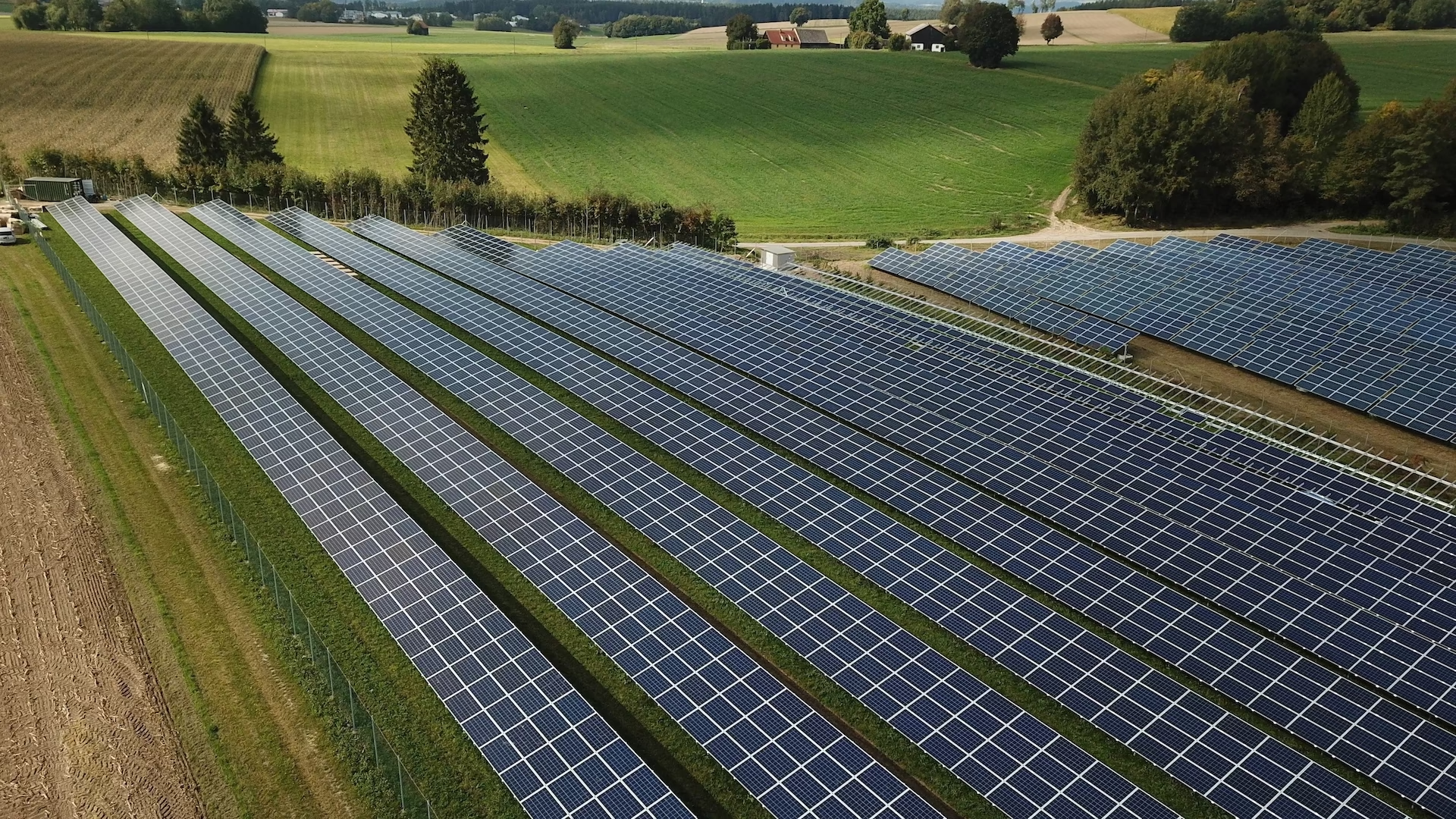
It is buying the same physics under different paper. SOLA reached financial close on Naos-1 — 300 MW AC of solar, 435 MWp DC, with 660 MWh of storage — contracted to Sasol and Air Liquide in the Free State and targeting commercial operation in 2028. It is described as South Africa’s largest utility-scale solar and battery project built for private offtakers. Here the storage is not sold to the transmission company at all; it shapes a private supply profile for two industrial buyers. Two routes, two different underwriting conversations. When storage stopped being exotic, this is what it became.
What should a sponsor or an offtaker take from it?
Describe the service, not the megawatt-hours. A sponsor who can say exactly what is being sold, to whom, for how long and how availability is measured is far closer to a funded project than one leading with capacity alone. For an industrial or commercial offtaker the honest framing matters just as much: storage buys shape, firmness and power quality, and the ability to hold a profile through a cloudy hour or a tariff peak. It does not on its own buy independence from the grid, and it does not turn an intermittent resource into a baseload one at any scale you like. What it buys should be written into the contract and measured against it.
Enerthia Energy works with sponsors, developers, funders and offtakers on exactly this framing — what is being sold, who is buying it, how it is contracted, and whether a funder will lend against it. That is the heart of our funding work.